
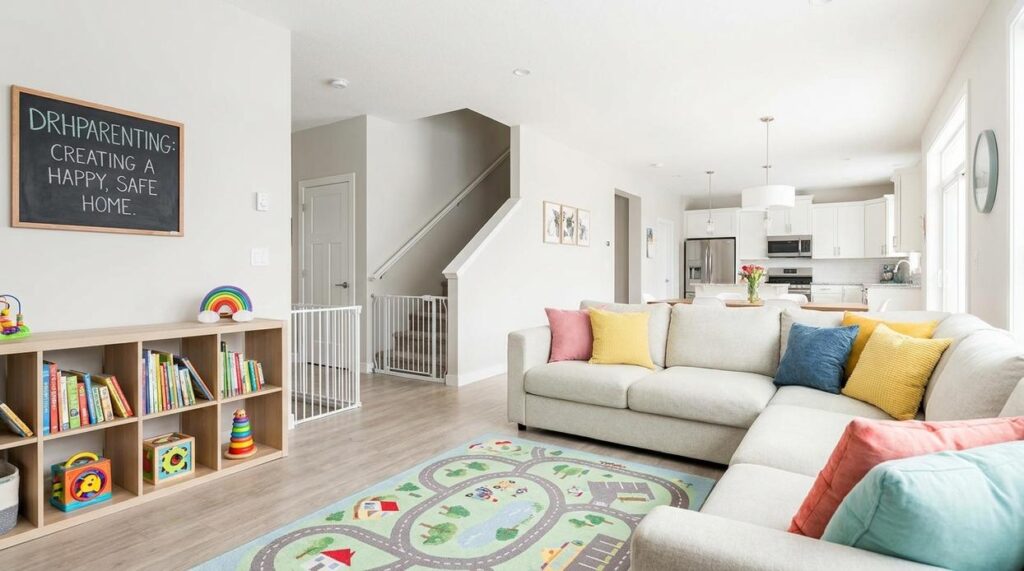
I know you want to build a child friendly home drhparenting where your kids feel safe and loved.
But you’re probably stuck wondering if you’re doing enough. Or if you’re focusing on the right things.
The pressure to get everything perfect can be paralyzing. I see it all the time.
Here’s the truth: creating a nurturing home isn’t about being perfect. It’s about understanding what actually matters to your child’s development and then building your daily routines around that.
I’ve put together a practical guide based on real child development principles. Not theories that sound good but fall apart when your toddler has a meltdown at bedtime.
This article gives you a clear framework for building both physical safety and emotional security in your home. You’ll learn where to focus your energy and what you can stop worrying about.
We’re moving from the big concepts to the daily practices that actually work. The stuff you can start doing today.
No guilt trips about what you should have done differently. Just a straightforward plan for creating the home environment your kids need to thrive.
Pillar 1: Establishing Unshakeable Physical Safety
You walk into your living room and your toddler is scaling the bookshelf like it’s Mount Everest.
Your heart stops.
This is the moment most parents realize that outlet covers aren’t enough. Not even close.
Some experts say you should just watch your kids constantly. Never take your eyes off them for a second. And sure, that sounds great in theory. But you also need to use the bathroom. Make dinner. Answer the door.
Here’s what I’ve learned after years of working with families.
Real safety isn’t about creating a padded prison. It’s about building what I call Yes Spaces. Places where your child can touch, climb, and explore without you holding your breath every three seconds.
For infants, that means a soft rug where they can roll without hitting hard edges. You want textures they can feel with their tiny fingers. Soft blankets. Smooth wooden toys they can mouth safely.
When they hit the toddler years? Everything changes.
Now you’re anchoring furniture to walls because they will climb. Not might. Will. The dresser that seems sturdy wobbles when a 30-pound human uses the drawers as a ladder. I’ve seen it happen in homes that looked perfectly safe at first glance.
You need cabinet locks on anything with cleaning supplies. Toilet locks (because toddlers are weirdly fascinated with toilets). And a fire safety plan that you’ve actually practiced, not just thought about.
School-aged kids bring different worries.
They can open doors. Reach high shelves. They’re curious about everything, which means poison control needs to stay on your radar. Those colorful laundry pods? They still look like candy to a six-year-old.
But here’s something most drhparenting parenting advice from drhomey resources skip over.
Physical safety includes teaching body autonomy.
Start simple. “Your body belongs to you.” Let them decide if they want to hug Grandma or just wave. It feels awkward at first, especially when relatives get offended. But you’re teaching them that they control who touches them.
Use bath time to name body parts correctly. No cutesy nicknames. When kids know the real words, they can communicate clearly if something’s wrong.
Then there’s the screen in their hand.
Digital safety starts way earlier than most parents think. Before you hand over that tablet, set the ground rules. Where can they use it? (Common areas where you can see the screen.) How long? What apps are okay?
I’m not saying ban technology. That’s not realistic in a child friendly home drhparenting creates.
But I am saying that a five-year-old doesn’t need unsupervised YouTube access. The algorithm doesn’t care about your kid. It cares about watch time.
Pro tip: Set up devices with parental controls before your child ever touches them. It’s ten times harder to add restrictions after they’re used to having free rein.
Physical safety isn’t one conversation. It’s a hundred small decisions that add up.
The corner bumpers you add when they start crawling. The furniture you anchor when they start pulling up. The boundaries you teach when they start understanding words.
Each stage builds on the last.
Pillar 2: Cultivating Deep Emotional Security
Your kid melts down because their toast broke in half.
You’re already late for work. The dog just threw up. And now you’re supposed to validate feelings about bread geometry?
I hear this all the time. Parents tell me that emotional validation sounds great in theory but feels impossible when you’re living in the real world.
Some experts say you should validate every single feeling your child has. Others argue that too much validation creates entitled kids who can’t handle reality.
Here’s where I land on this.
Validation isn’t about agreeing with behavior. It’s about recognizing the feeling behind it. There’s a big difference between “Yes, you can throw your toy” and “I see you’re very angry the toy broke. It’s okay to be sad.”
One gives permission for bad behavior. The other acknowledges their emotional experience while still holding the line.
When you practice active listening at drhparenting, you’re teaching your child that their feelings matter. Put down your phone. Make eye contact. Reflect back what you hear. “So you’re upset because your friend didn’t share?”
That’s it. You don’t need to fix it or explain why they shouldn’t feel that way.
Now let’s talk about mistakes. Spilled milk happens. A broken dish happens. Your reaction in those moments? That shapes whether your child will come to you when something bigger goes wrong.
I call this creating a mistake positive zone. When you say “Oops, accidents happen. Let’s clean it up together,” you’re building trust.
Setting boundaries works the same way. Firm limits delivered calmly make kids feel secure, not controlled. They need to know where the edges are.
Pillar 3: Nurturing a Curious and Confident Mind
Your kid asks why the sky is blue.
You freeze. Because honestly, you’re not sure either.
Here’s what most parents do. They either make something up or tell their kid to go play. I used to do the same thing until I realized I was teaching the wrong lesson.
The right answer? “I don’t know. Let’s find out together.”
That’s what curiosity looks like.
Some parents worry that admitting you don’t know something makes you look weak. They think kids need parents who have all the answers. And I get where that comes from. You want to be the expert your child can rely on.
But here’s what they’re missing.
When you pretend to know everything, you teach your kid that not knowing is shameful. That questions are problems instead of opportunities.
I’ve watched this play out in my own child friendly home drhparenting approach. The moment I started saying “I don’t know” more often, my kids started asking better questions.
Let me break down what actually builds a curious and confident mind.
Play Without Rules
Unstructured play is where real learning happens. Not the kind with instructions and batteries. The kind where kids figure things out themselves.
Give them blocks instead of video games. Cardboard boxes instead of expensive playsets. (You’d be surprised how long a good box lasts.)
This is how they learn problem solving. How they work through frustration. How they regulate their emotions when the tower falls down for the tenth time.
Reading as Connection
Reading shouldn’t feel like homework.
Pick books your kids actually want to read. Sit together. Ask what they think will happen next. Let them turn the pages even if they’re going too fast or too slow.
The goal isn’t finishing the book. It’s building a habit where books mean time with you.
Screens That Spark Conversation
I’m not going to tell you screens are evil. That’s not realistic.
But here’s what works. Watch with them. Talk about what you’re seeing. Ask questions. Use what’s on screen as a starting point for real conversation.
A show about space? Look up pictures of real planets together afterward.
The screen isn’t the enemy. Passive consumption is.
When you focus on curiosity over correctness, something shifts. Your kids stop being afraid of mistakes. They start exploring instead of waiting to be told what to do.
And that confidence? That’s what carries them through everything else.
The Framework: The Role of Routine and Consistency
Your kid melts down every morning over getting dressed.
Bedtime turns into a two-hour negotiation.
After school? Complete chaos.
Here’s what most parenting advice gets wrong about routines. They tell you to create a schedule and stick to it. Like your family is some kind of machine that just needs the right programming.
But kids aren’t robots. And honestly, neither are you.
The real reason routines work has nothing to do with control. It’s about safety.
When your child knows what comes next, their brain can relax. They’re not constantly scanning for threats or surprises. That’s when the power struggles start to fade.
I focus on three anchor points that actually move the needle.
A calm morning start. Not a perfect one. Just predictable. Same wake-up window, same basic sequence. Your kid’s nervous system learns what to expect.
A connecting ritual after school or work. This is the one most parents skip. Fifteen minutes of just being present before you jump into homework or dinner prep. (Even if it’s just sitting together with a snack.)
A soothing bedtime wind-down. Same time, same steps. Their body starts preparing for sleep before you even say it’s time.
Now here’s something you won’t hear elsewhere.
Routines fail when you forget to give your child a role in the family. Age-appropriate chores aren’t about lightening your load. They build competence. They answer that deep question every kid has: Do I matter here?
Consistency doesn’t mean rigid. Life happens. You’ll have late nights and sick days and travel.
What matters is your response stays predictable. Not the exact timing.
That’s how you build a child friendly home drhparenting approach that actually lasts.
Your Nurturing Home Starts Today
You now have a clear blueprint for building the safe and nurturing home your child deserves.
I know it can feel overwhelming. You want to do everything right and create the perfect environment.
But here’s the truth: creating this environment isn’t about grand or perfect gestures. It’s about small and consistent actions that add up over time.
The pillars of physical safety, emotional security, and intellectual nurturing work together. When you focus on these areas, you create a foundation where your child can actually thrive.
You don’t need to overhaul everything tonight.
Choose one small strategy from this guide to implement right now. Maybe it’s a new bedtime routine or childproofing one room better. Maybe it’s just putting your phone down during dinner.
The journey to a more nurturing child friendly home drhparenting begins with a single intentional step.
Your child doesn’t need perfection. They need you showing up consistently and trying.
Start tonight. Pick one thing and do it.
